
SSS
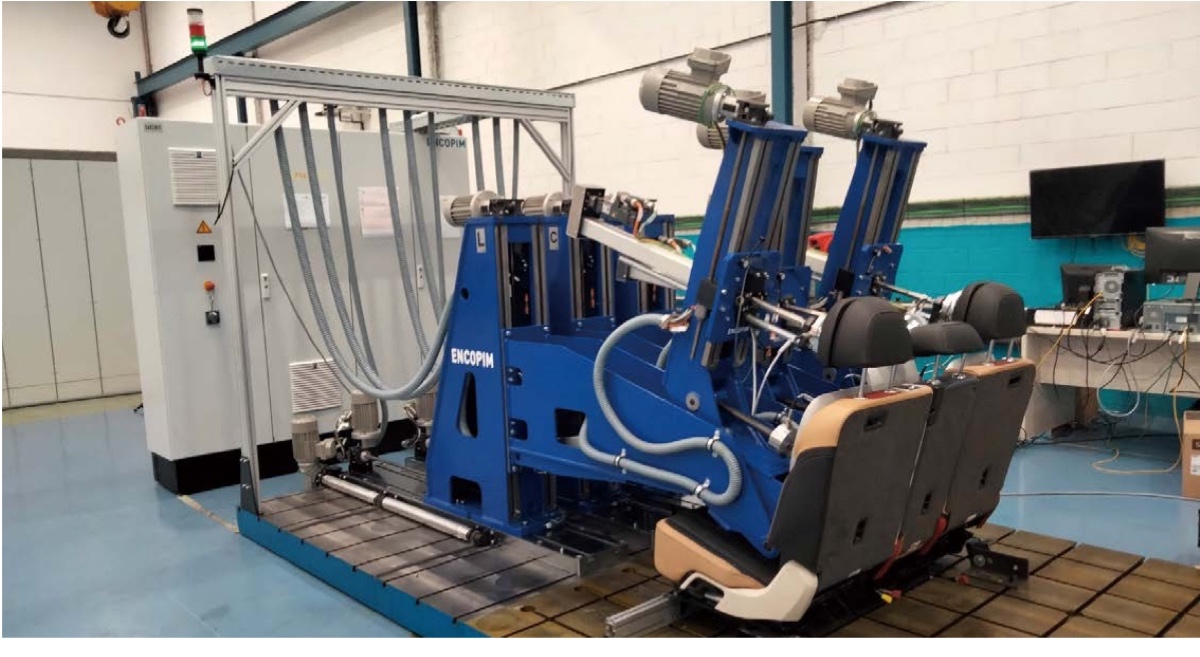
Seat and head restraint static strength test system.
System configuration
SSS consists of a baseplate with up to three seat stations. The baseplate and the seat specimens are mounted on an existing bedplate. The standard configuration has three stations.
Z (vertical): motor-driven adjustment on each station.
X (longitudinal): manual rack-and-pinion adjustment on each station.
Y (transverse): manual rack-and-pinion adjustment on the two lateral stations.
All stations can be equipped for height retention testing. Seat-back and head-restraint loading is automated and closed-loop controlled via servo-electric actuators. The servo-electric system runs more quietly, requires no cooling, and is maintenance-free.
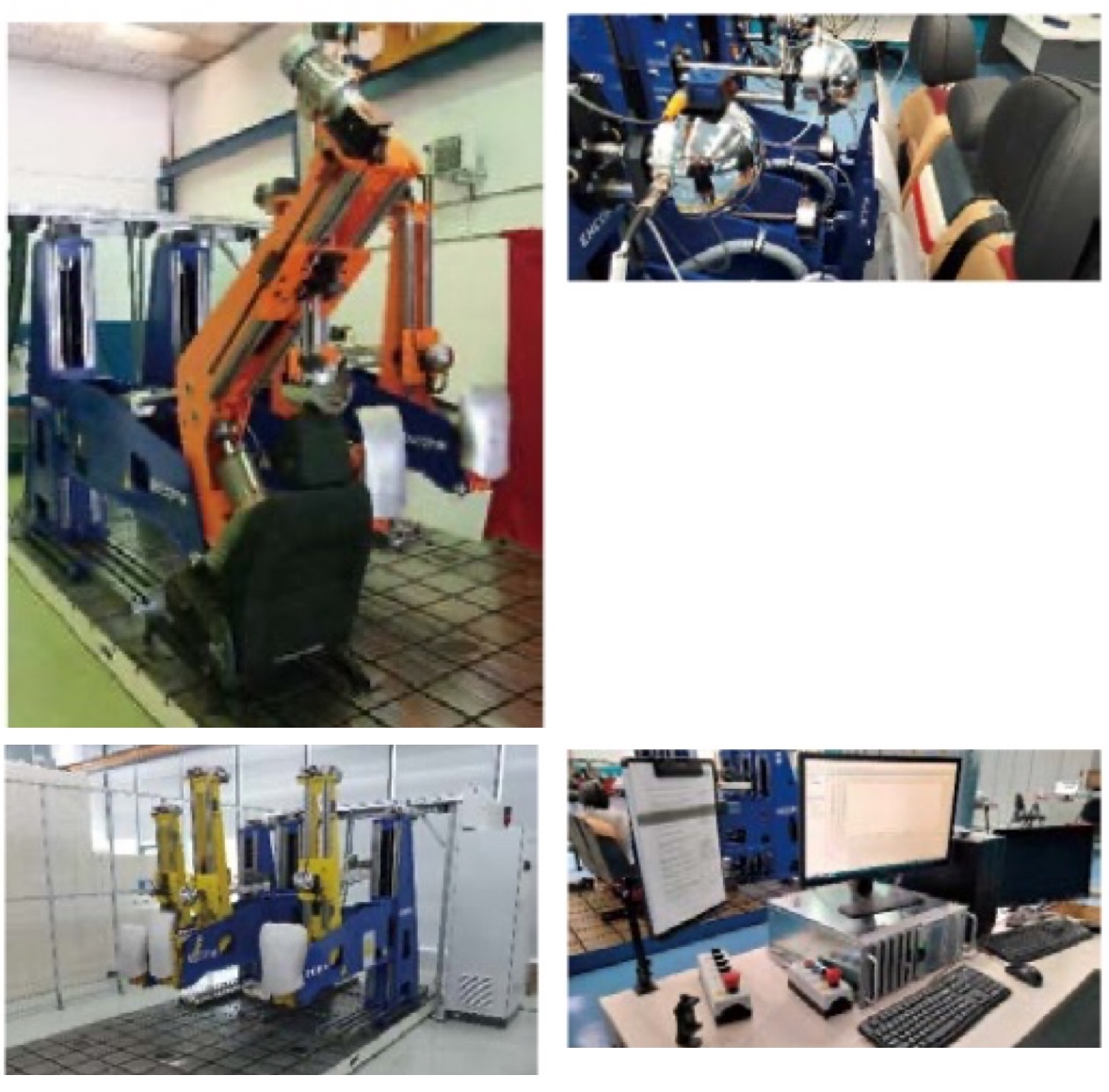
Height retention test, headrest top surface detection, testing of different back widths and control panel.
Main parameters
| Parameter | Specification |
|---|---|
| Back pan rated / maximum short-time static moment | 3500 / 5000 Nm; rated >3500 Nm up to 75° |
| Back pan maximum moment rate | 10°/s (reaching up to 5000 Nm) |
| Back force transducer (R290 mm from H-point) | Rated force 25 kN; accuracy 0.04% |
| Torso reference line angle range | 0° (vertical) to 75° |
| Head restraint and height retention rated / maximum short-time static force | 2000 / 3400 N |
| Head force transducer | Rated 2.5 kN; static lateral limit force 2.5 kN; accuracy 0.03% |
| Head actuator centreline displacement along the torso reference line from H-point | 580–1000 mm |
| Headform sphere tip longitudinal displacement from torso reference line | −100 to +430 mm |
| H-point X positioning range | 1000 mm |
| Lateral station Y positioning relative to fixed centre station | 280–840 mm |
| H-point Z positioning range | 180–800 mm |